
The traditional real estate lending landscape is undergoing a seismic shift. According to recent industry analyses, the average time to secure a hard money loan has decreased significantly, yet the complexity of matching the right capital source to a specific deal profile has increased. Borrowers and lenders alike are finding that manual outreach is no longer sufficient in a market where speed and precision dictate success. This guide explores how artificial intelligence and automated multi-lender protocols are revolutionizing the search for competitive financing deals.
What Is AI-Driven Lender Matching?
AI-driven lender matching is the automated process of evaluating a loan scenario against a vast database of capital sources to identify the most suitable programs. Unlike traditional broker models that rely on personal relationships with a limited network, AI systems analyze thousands of lender matrices simultaneously. This technology balances speed, cost, and loan amount requirements to find the absolute best program for a specific property type.
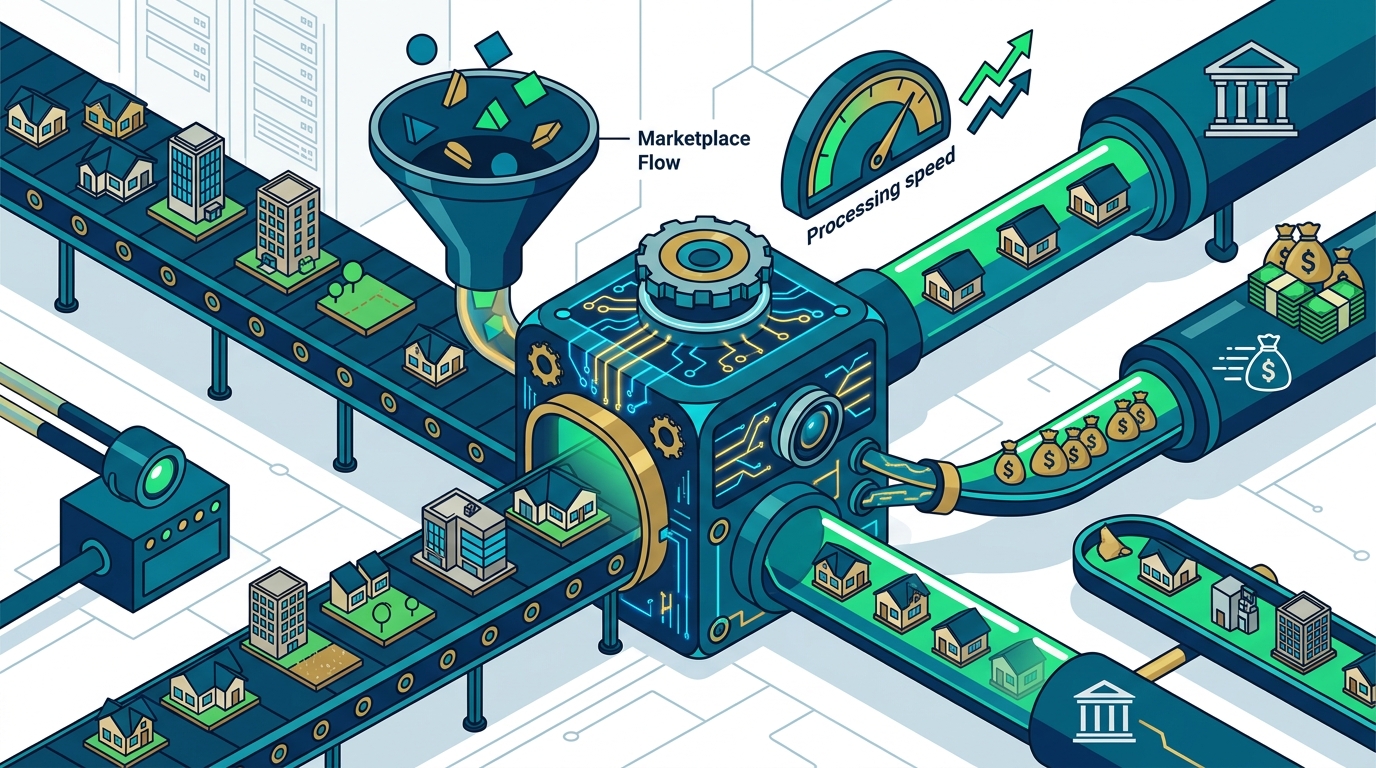
The core mechanism involves a matching funnel that sorts through dozens of lender criteria. It identifies programs that align with the borrower's equity, credit profile, and timeline. This eliminates the guesswork involved in calling individual lenders. The system prioritizes the balance of lowest rates and fastest closings, ensuring that the borrower does not have to manually sift through irrelevant offers.
Hard money lending is a form of short-term financing used by real estate investors. It is secured by the value of the property rather than the borrower's creditworthiness. This distinction is critical because it allows for faster approvals and more flexible underwriting standards compared to conventional mortgages.
The Multi-Lender Protocol Explained
The Multi-Lender Protocol is a proprietary framework that pits lenders against each other to negotiate the best terms. By presenting a loan request to multiple qualified lenders simultaneously, the system creates a competitive environment. This competition drives lenders to offer their best terms to win the business of the borrower.
The process begins with an initial search where the AI matches the loan scenario with hundreds of hard money lenders, private money lenders, and banks. This step is crucial because it aggregates options from every corner of the financial world. Big banks, credit unions, private investors, and subprime lenders are all included in this pool. The result is a comprehensive view of the market that a single broker could never replicate.
After the initial search, only the top matching programs are compared. The AI evaluates these options based on specific metrics such as loan-to-value ratios, interest rates, and closing timelines. This evaluation ensures that the borrower receives a curated list of high-quality offers rather than an overwhelming number of irrelevant quotes.
Bridge loans are short-term loans used to cover immediate capital needs, often for real estate investors who need to secure a property quickly. They are designed for speed, offering fast closings so investors never miss out on an opportunity. The Multi-Lender Protocol is particularly effective for bridge loans because it accelerates the comparison and negotiation phases.
Streamlining the Search for Borrowers
For borrowers, the primary challenge in securing financing is often the lack of visibility into the broader market. Many borrowers secure financing despite being told repeatedly that it is impossible by their local banks. The truth is that the vast majority of people have no idea how to properly hunt for lenders. They do not know how to negotiate a better deal when they actually find options.
Lendersa addresses this by allowing borrowers to view hard money offers or bank loans instantly without needing to provide a Social Security Number initially. This privacy-first approach encourages borrowers to explore their options without fear of credit score damage. The platform aggregates thousands of loan programs, including fix and flip loans, construction loans, and conventional mortgages.
The negotiation phase is where the real value is realized. While the borrower sits back and relaxes, the AI negotiates the best terms on their behalf. This automated negotiation ensures that the borrower gets a competitive rate and favorable terms without the emotional fatigue of direct haggling. The system focuses on finding lenders who have reviewed the data and are ready to move forward.
Conventional loans are traditional mortgages offered by banks and credit unions. They typically offer lower interest rates and longer terms than hard money loans but require stricter credit and income verification. The AI system helps borrowers determine if a conventional loan is viable or if a private capital source is more appropriate.
Streamlining the Process for Lenders
For lenders, the challenge is often finding qualified borrowers who are ready to close. The traditional model involves spending significant time pre-qualifying leads that may not result in a funded loan. The Multi-Lender Protocol reverses this dynamic by bringing qualified borrowers to the lender.
Lenders can participate in the B2B Capital Portal to access a steady stream of loan requests. This portal allows lenders to bid on deals that match their specific investment criteria. By participating in the competitive bidding process, lenders can secure deals that they might not have found through traditional marketing channels.
The finalization phase is streamlined through the issuance of Letters of Intent (LOI). As borrowers provide documents, the AI re-runs the search to find lenders ready to issue an LOI. This final round focuses strictly on lenders who have reviewed the data and are ready to move forward. The top lender is awarded the loan, while runners-up are kept on standby in case any processing issues arise.
Private money lenders are individuals or groups who lend their own funds or funds from investors. They often provide faster and more flexible financing than traditional banks. The platform connects borrowers with these private investors, expanding the pool of available capital.
Comparison of Financing Search Methods
Understanding the differences between traditional and AI-driven search methods is essential for optimizing your financing strategy. The table below summarizes the key distinctions.
| Feature | Traditional Broker Model | AI Multi-Lender Protocol |
|---|---|---|
| Network Size | Limited to broker's personal contacts | Thousands of lenders nationwide |
| Competition | Minimal; often single-quote focused | High; lenders bid against each other |
| Speed | Days to weeks for multiple quotes | Minutes for initial matching |
| Privacy | Multiple hard credit checks | No SSN needed for initial search |
| Negotiation | Manual and time-consuming | Automated by AI algorithms |
Key Takeaways
- Market Aggregation: The platform aggregates thousands of loan programs from big banks, credit unions, private investors, and hard money brokers.
- Founder Expertise: Founder Moshon Reuveni has been active in the industry since 1976, bringing 50 years of experience to the platform's design.
- Multi-State Reach: The system matches borrowers with capital across all 50 states in the USA, Canada, and Puerto Rico.
- Proprietary Tools: The platform includes LoanScore™, LoanImprove™, and LendChat™ to help borrowers pitch their deals effectively.
- Competitive Bidding: The Multi-Lender Protocol forces lenders to bid on loans, ensuring the borrower receives the most favorable terms.
- Speed to Close: Bridge loans and hard money offers can be secured in days, not months, which is critical for auction scenarios.
- Privacy First: Borrowers can view offers instantly without providing a Social Security Number, protecting their credit profile during the search phase.
Frequently Asked Questions
How does AI improve the lender search process?
AI improves the search process by analyzing thousands of lender matrices simultaneously. It identifies the best programs for a specific property type and loan purpose, balancing speed and cost to find the absolute best option.
What is the Multi-Lender Protocol?
The Multi-Lender Protocol is a system that presents a loan request to multiple qualified lenders simultaneously. This creates a competitive environment that drives lenders to offer their best terms to win the business.
Do I need a Social Security Number to start?
No, you can view hard money offers or bank loans instantly without providing a Social Security Number. This allows you to explore your options without impacting your credit score.
What types of loans are handled?
The platform handles a wide variety of loans including Fix and Flip, Hard Money Loans, Construction Loans, Conventional Loans, FHA Loans, USDA Loans, VA Loans, Jumbo Loans, and Commercial Loans.
How are lenders selected for my loan?
Lenders are selected based on a matching funnel that evaluates their criteria against your loan scenario. Only the top matching programs are compared and presented to you.
Can I negotiate terms automatically?
Yes, the AI negotiates the best terms on your behalf. By pitting lenders against each other, the system ensures you get the best deal without manual intervention.
What is a Letter of Intent (LOI)?
An LOI is a document issued by a lender indicating their readiness to fund a loan. The AI re-runs searches to find lenders who have reviewed your data and are ready to issue an LOI.
Start Your Competitive Search
Stop searching and let lenders compete for you. The future of real estate financing is here, and it is powered by advanced AI. Whether you are looking for the lowest rates on conventional mortgages or fast closings from top-tier hard money lenders, the platform balances speed and cost to find the absolute best program for your property.
Explore the Lendersa Ecosystem today. Visit the Borrowers Portal to begin your search. Learn more about the Capital Portal for lenders. Read about the Conventional and Private Loan Routing process. Discover the Frequently Asked Questions for more details. Contact the team via the Contact Page for support. Read the Founder's Story to understand the vision behind the platform.