
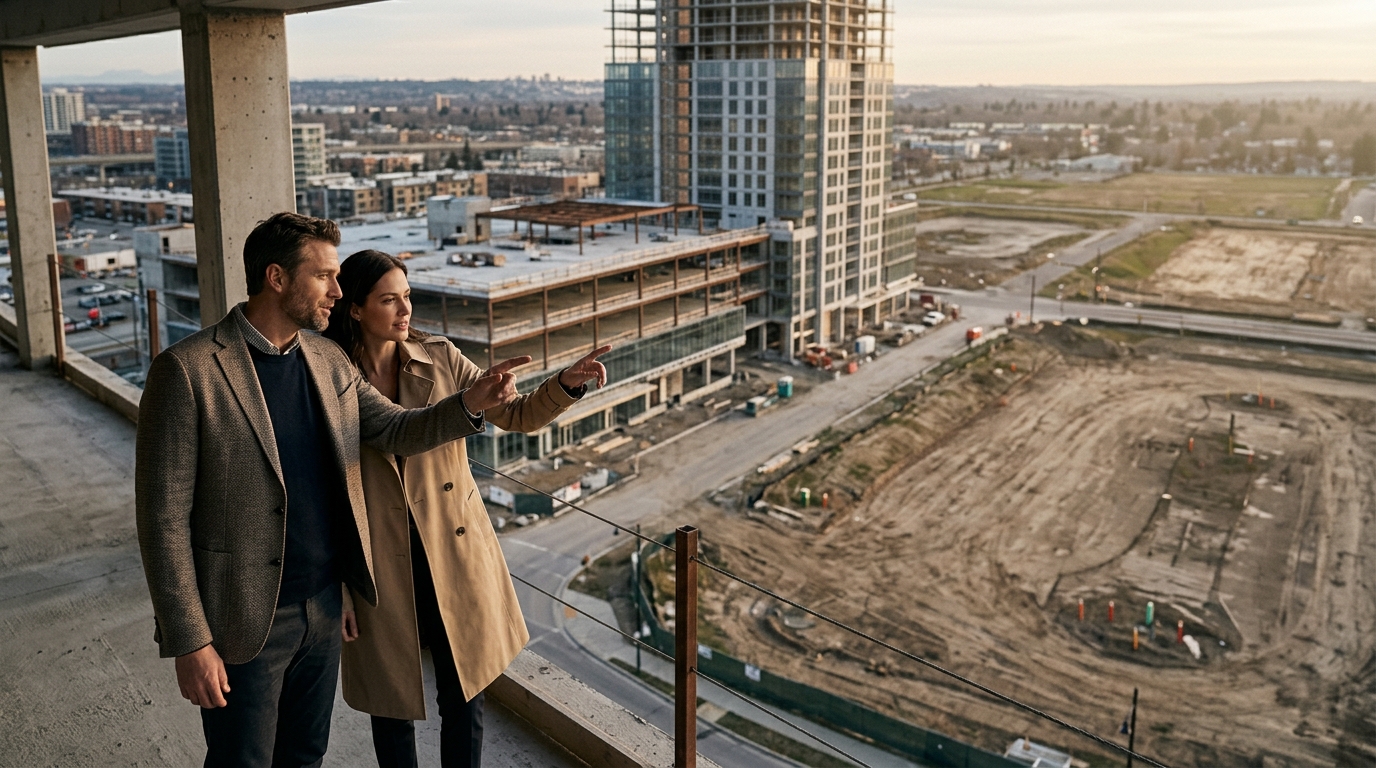
Securing capital for commercial real estate or undeveloped land is fundamentally different from residential lending. According to recent industry data, over 60% of commercial loan applications are initially rejected by traditional banks due to strict debt-service coverage ratios and property condition requirements. This rejection rate highlights a critical gap in the market for alternative funding sources. Investors who understand the nuances between hard money bridge loans and conventional commercial mortgages can secure faster closings and more favorable terms. This guide explores the specific financing options available for these asset classes, leveraging the Multi-Lender Protocol to match your unique scenario with the right capital. (About Lendersa 50 Years)
Understanding Commercial Loan Structures
Commercial real estate financing operates on a completely different risk model than residential mortgages. Lenders evaluate the income-generating potential of the property rather than just the borrower's personal credit score. This distinction is vital for investors looking to expand their portfolios.
Commercial loans are typically structured as non-recourse or limited-recourse debt, meaning the lender's claim is primarily against the asset itself. This structure protects the borrower's personal assets but requires a higher down payment, often ranging from 20% to 35%. The loan terms are also shorter, usually lasting between 5 to 10 years, with an amortization period of 20 to 25 years. This creates a balloon payment at the end of the term, requiring refinancing or sale.
For properties that do not yet generate income, such as fix-and-flip projects or raw land, traditional bank financing is nearly impossible. These scenarios require asset-based lending, where the loan amount is determined by the After Repair Value (ARV) or the appraised value of the land. Understanding this distinction is the first step in choosing the right lender.
Hard Money Lenders for Commercial Projects
Hard money loans are short-term, asset-based loans provided by private investors or companies. They are the go-to solution for commercial investors who need speed and flexibility. Unlike banks, hard money lenders focus on the equity in the property rather than the borrower's financial history.
Speed and Flexibility
The primary advantage of hard money is speed. While a conventional bank loan can take 45 to 60 days to close, hard money lenders can fund a commercial loan in as little as 7 to 14 days. This speed is critical for investors who need to beat competitors at auction or secure a time-sensitive deal. The Multi-Lender Protocol at Lendersa allows you to compare offers from multiple hard money lenders simultaneously, ensuring you get the fastest closing time without sacrificing terms.
Loan-to-Value Ratios
Hard money lenders typically offer a Loan-to-Value (LTV) ratio of 65% to 75% for commercial properties. This means you must provide 25% to 35% of the purchase price as a down payment. For fix-and-flip projects, lenders may also offer a renovation loan, covering both the purchase and the repair costs based on the projected ARV. This structure allows investors to leverage their equity to fund multiple projects without tying up all their capital.
Interest Rates and Points
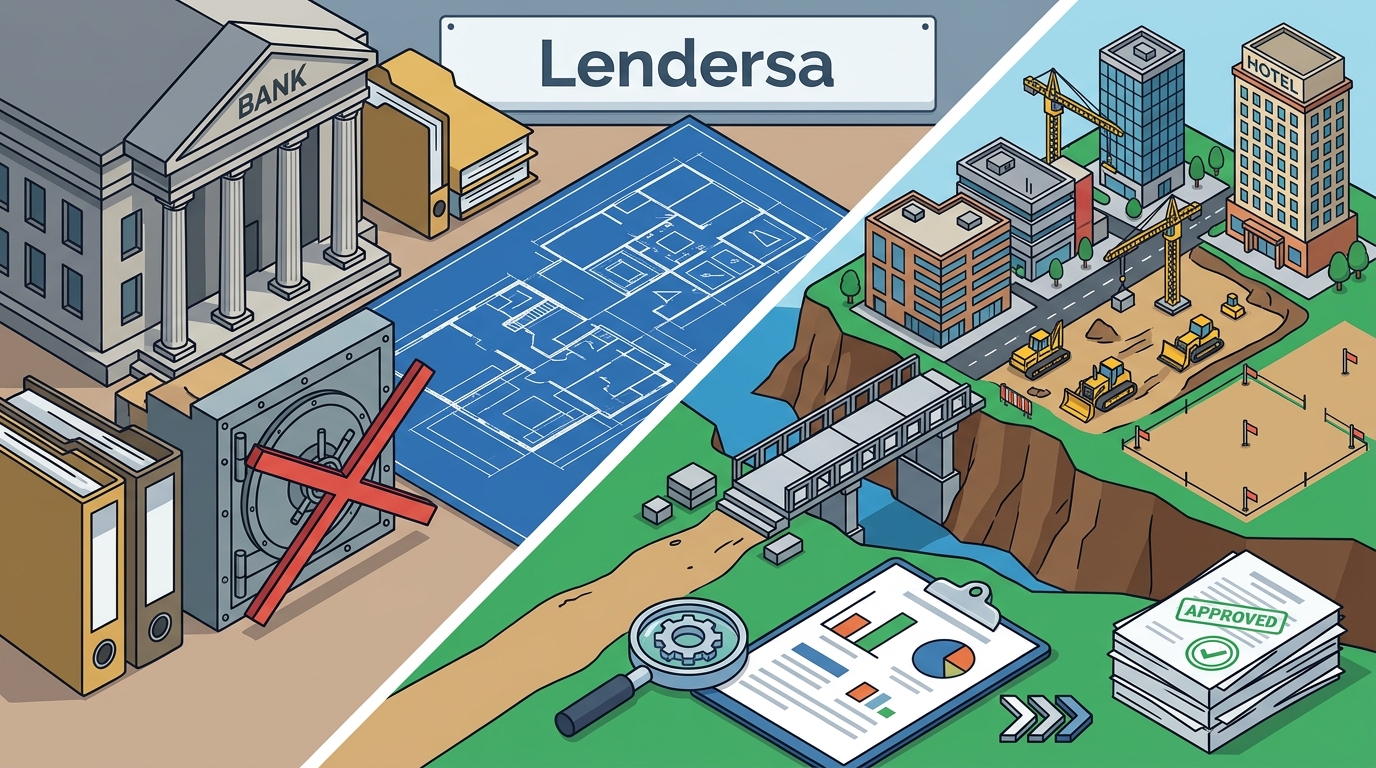
Due to the higher risk and shorter term, hard money loans come with higher interest rates, typically ranging from 8% to 15%. Additionally, lenders charge origination points, usually 1% to 3% of the loan amount. While these costs are higher than conventional loans, they are often justified by the speed of funding and the ability to close deals that banks would reject.
Vacant Land Financing Options
Financing vacant land is one of the most challenging aspects of real estate investing. Lenders view raw land as high-risk because it generates no income and has limited collateral value if the borrower defaults. However, several options exist for investors willing to navigate the landscape.
Owner Financing
Owner financing, also known as seller financing, is the most accessible option for vacant land. In this scenario, the seller acts as the lender, allowing the buyer to make payments directly to them. This option often requires a lower down payment, typically 10% to 20%, and more flexible credit requirements. It is ideal for investors looking to acquire land for future development without the burden of traditional bank loans.
Hard Money for Land Development
Hard money lenders are increasingly offering loans for vacant land, particularly if the land has approved zoning or utilities nearby. These loans are often structured as bridge loans, with terms ranging from 6 months to 3 years. The LTV ratio for vacant land is lower than for improved properties, usually around 50% to 65%. This means you will need a larger down payment, but the speed of funding can still be a significant advantage.
Construction Loans for Land
If you plan to develop the land immediately, a construction loan may be a viable option. These loans cover the cost of purchasing the land and the subsequent development. Once the project is complete, the loan is often converted to a permanent mortgage. This option requires a detailed development plan and a strong track record with the lender.
Conventional vs. Private Capital
Choosing between conventional bank loans and private capital depends on your investment strategy, timeline, and financial profile. Each option has distinct advantages and disadvantages that must be weighed carefully.
| Feature | Conventional Commercial Loan | Private/Hard Money Loan |
|---|---|---|
| Closing Time | 45-60 Days | 7-14 Days |
| Interest Rates | 6.5% - 9.5% | 8% - 15% |
| Down Payment | 20% - 30% | 25% - 35% |
| Credit Focus | Personal & Business Credit | Property Equity & ARV |
| Best For | Stable, Income-Generating Assets | Fix-and-Flip, Land, Urgent Deals |
Conventional loans are ideal for investors with strong credit and income who are looking for long-term holds. They offer lower rates and longer terms, reducing the monthly payment burden. However, the rigorous underwriting process can delay closing and reject deals that do not meet strict criteria.
Private capital, including hard money and bridge loans, is best for investors who need speed and flexibility. These loans are perfect for time-sensitive deals, distressed properties, or projects that require significant renovation. The higher cost is offset by the ability to close quickly and secure deals that others cannot.
The Lendersa Ecosystem Advantage
Finding the right lender for commercial or vacant land can be a daunting task. Lendersa simplifies this process by aggregating thousands of loan programs from big banks, credit unions, private investors, and hard money brokers. Our proprietary AI tools, including LoanScore™ and LoanImprove™, help you understand your eligibility and optimize your loan profile before you apply.
The Multi-Lender Protocol is at the heart of our platform. By submitting your loan request once, you allow multiple lenders to compete for your business. This competitive environment drives down interest rates and improves loan terms, ensuring you get the best possible deal. Our Quote Comparison Dashboard allows you to view and compare offers side-by-side, making it easy to choose the right lender for your needs.
We also offer specialized tools for real estate agents and lenders. The B2B Capital Portal provides brokers with access to a vast network of capital sources, while our LendChat™ feature facilitates direct communication between borrowers and lenders. This ecosystem ensures that every investor, regardless of their experience level, can find the funding they need.
Key Takeaways
- Commercial loans require higher down payments, typically 20% to 35%, due to the higher risk associated with income-generating properties.
- Hard money lenders offer speed, with closings possible in 7 to 14 days, making them ideal for auction purchases and fix-and-flip projects.
- Vacant land financing is challenging, with LTV ratios often limited to 50% to 65%, requiring significant equity from the borrower.
- Lendersa's Multi-Lender Protocol allows multiple lenders to compete for your business, resulting in better rates and terms.
- LoanScore™ and LoanImprove™ are proprietary tools that help borrowers optimize their profiles for approval.
- Conventional loans are best for long-term holds, while private capital is superior for short-term, high-velocity investments.
- Founder Moshon Reuveni brings 50 years of industry experience to Lendersa, ensuring a deep understanding of market dynamics.
Frequently Asked Questions
Can I get a commercial loan with bad credit?
Yes, hard money lenders and private investors often focus on the equity in the property rather than your credit score. While a poor credit history may result in higher interest rates, it does not necessarily disqualify you from securing commercial financing.
What is the minimum down payment for vacant land?
The minimum down payment for vacant land typically ranges from 20% to 50%, depending on the lender and the location of the land. Owner financing may offer lower down payment options, sometimes as low as 10%.
How long does it take to close a hard money loan?
Hard money loans can close in as little as 7 to 14 days. This speed is due to the streamlined underwriting process and the focus on property value rather than extensive financial documentation.
What is the Multi-Lender Protocol?
The Multi-Lender Protocol is Lendersa's proprietary technology that submits your loan request to multiple lenders simultaneously. This creates a competitive bidding environment, ensuring you receive the best possible terms and rates.
Do I need a Social Security Number to apply?
While most lenders will require some form of identification, Lendersa allows you to view initial offers without providing your Social Security Number. This protects your privacy while you explore your options.
Can Lendersa help with construction loans?
Yes, Lendersa connects borrowers with lenders who offer construction loans for both residential and commercial projects. Our AI matches your specific project details with the most suitable lenders in our network.
What is the LoanCompare™ tool?
LoanCompare™ is a feature within the Lendersa platform that allows you to view and compare loan offers from multiple lenders side-by-side. It highlights key differences in interest rates, points, and terms to help you make an informed decision.
Get Your Custom Loan Match
Stop searching for lenders one by one. Let Lendersa's AI do the heavy lifting. Whether you are looking for commercial real estate financing or vacant land loans, our platform connects you with the best capital sources in the market. Start your loan application today and discover how much you can borrow with competitive rates and fast closing times. Visit our FAQ page for more details or contact our team for personalized assistance.