

Traditional mortgage lending often relies on a linear, single-path approach where borrowers submit applications to one institution at a time. This method is inherently inefficient because it fails to account for the vast diversity of capital sources available in the modern financial ecosystem. According to recent industry analyses, borrowers who utilize multi-lender comparison strategies can secure significantly better terms by leveraging competitive bidding among financial institutions. This guide details the precise methodology for evaluating diverse loan structures, from hard money to conventional financing, ensuring you maximize capital efficiency. (About Lendersa 50 Years)
Understanding Loan Architectures
Before comparing offers, you must categorize the fundamental nature of each loan structure. Different lenders utilize distinct underwriting algorithms and risk models. Hard money loans are short-term financing options secured by real estate collateral, typically used by investors for fix-and-flip projects or bridge financing. These loans prioritize asset value over borrower creditworthiness, allowing for rapid funding but carrying higher interest rates.
Conventional loans, in contrast, are standardized mortgages that conform to guidelines set by government-sponsored enterprises like Fannie Mae or Freddie Mac. These loans generally offer lower interest rates and longer terms but require strict documentation of income and credit history. Understanding the distinction between these two primary categories is the first step in efficient evaluation.
Other structures include Non-QM (Non-Qualified Mortgage) loans, which cater to borrowers with non-traditional income sources, and FHA loans, which are insured by the Federal Housing Administration and require lower down payments. Each structure serves a specific strategic purpose. For instance, a hard money lender might provide capital in days, whereas a conventional bank might take thirty to forty-five days to close.
The Multi-Lender Protocol
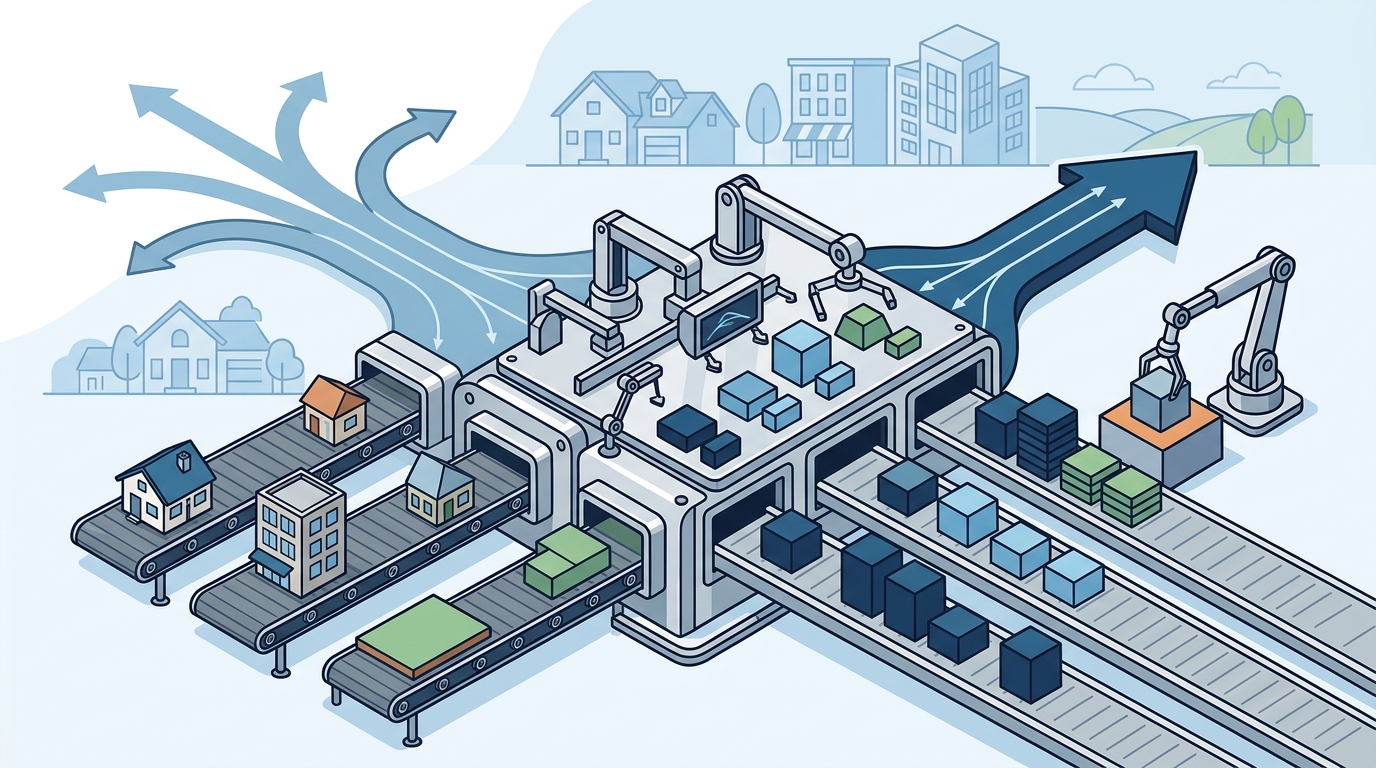
Evaluating multiple structures simultaneously requires a systematic approach known as the Multi-Lender Protocol. This protocol involves submitting your loan scenario to a diverse network of capital providers rather than relying on a single source. By doing so, you create a competitive environment that forces lenders to offer their most favorable terms to win your business.
The process begins with a comprehensive pre-application assessment. This step involves gathering all necessary financial documents, property details, and investment goals. Once this data is compiled, it is routed through a matching funnel that identifies the most suitable lenders for your specific profile. This eliminates the guesswork of calling random banks or brokers.
As you submit your data, the system evaluates hundreds of lender matrices. This evaluation is not merely about interest rates. It considers loan-to-value ratios, closing timelines, prepayment penalties, and point structures. The goal is to identify the absolute best program for your property type and loan purpose. For more details on how this routing works, explore our Conventional and Private Loan Routing framework.
Evaluating Cost Versus Speed
One of the most critical aspects of loan evaluation is balancing cost against speed. In real estate investing, time is often a direct financial factor. A lower interest rate is meaningless if the closing period causes you to miss a lucrative auction opportunity. Conversely, a fast-closing loan with exorbitant fees may erode your profit margin.
To evaluate this trade-off effectively, you must calculate the total cost of capital. This includes the interest rate, origination fees, discount points, and any ongoing servicing fees. For short-term holds, the daily cost of borrowing is paramount. For long-term holds, the annual percentage rate (APR) becomes the primary metric.
Consider the following comparison of typical loan structures:
| Loan Type | Typical Closing Time | Interest Rate Range | Best Use Case |
|---|---|---|---|
| Hard Money | 7-14 Days | 10% - 15%+ | Fix and Flip, Auctions |
| Conventional | 30-45 Days | 6% - 8% | Primary Residence, Rental |
| FHA Loan | 30-45 Days | 6.5% - 8.5% | First-Time Buyers |
| Construction Loan | 14-21 Days | 9% - 12% | New Builds, Renovations |
This table illustrates the variance in speed and cost. A borrower must decide which metric aligns with their strategic goals. If speed is the priority, hard money or bridge loans are the logical choice. If cost efficiency is paramount, conventional or FHA loans offer superior long-term value.
AI-Driven Comparison Tools
Manual evaluation of dozens of loan offers is prone to human error and cognitive bias. Artificial intelligence tools have revolutionized this process by automating the comparison of complex financial data. These tools can instantly parse thousands of lender programs to find matches based on your specific criteria.
At Lendersa, we utilize proprietary AI to match your loan scenario with hundreds of hard money lenders, private money lenders, and banks. This technology does not just sort by interest rate. It balances speed, cost, and loan amount to identify the optimal solution. The AI evaluates the top matching programs and presents them in a clear, comparative format.
Furthermore, AI tools can assist in improving your loan profile before submission. Features like LoanImprove and LoanScore help borrowers understand how their financial health impacts their eligibility and pricing. By addressing weak points in your application, you can position yourself to receive better offers from the lending community.
The negotiation phase is also enhanced by technology. By presenting your loan request to multiple qualified lenders simultaneously, the system creates a competitive environment. Lenders are incentivized to offer their best terms to win your business. This automated negotiation process ensures you do not leave money on the table.
Key Takeaways
- Multi-Lender Strategy: Submitting your loan to multiple lenders simultaneously creates competition, often resulting in better terms and faster closings.
- Cost vs. Speed: Evaluate total cost of capital, not just interest rates. Short-term holds require speed, while long-term holds prioritize low APR.
- AI Matching: Proprietary AI tools can analyze hundreds of lender matrices instantly, identifying the best programs for your specific property type.
- Loan Types: Hard money loans offer speed for investors, while conventional loans offer lower costs for primary residences.
- Pre-Application: Using tools like LoanScore helps identify potential issues before submission, improving your chances of approval.
- Negotiation: Automated negotiation pits lenders against each other, driving down rates and fees.
- Comprehensive Review: Always review the Letter of Intent (LOI) carefully to understand all fees and conditions before finalizing.
Frequently Asked Questions
How does AI compare loan offers?
AI compares loan offers by analyzing hundreds of data points from lender matrices, including interest rates, fees, closing times, and loan-to-value ratios. It then ranks these offers based on your specific criteria to find the best match.
What is the Multi-Lender Protocol?
The Multi-Lender Protocol is a process where a borrower's loan request is submitted to multiple qualified lenders simultaneously. This creates a competitive bidding environment that encourages lenders to offer their most favorable terms.
Can I compare hard money and conventional loans?
Yes, you can compare hard money and conventional loans using platforms like Lendersa. The AI will evaluate both types of capital sources to determine which is more suitable for your specific property and financial situation.
How long does it take to get loan offers?
With AI-driven matching, you can receive initial loan offers in minutes. However, the final underwriting and closing process varies by loan type, ranging from a few days for hard money to several weeks for conventional loans.
Do I need a high credit score for hard money?
No, hard money lenders primarily focus on the value of the collateral property rather than the borrower's credit score. This makes hard money an excellent option for investors with lower credit scores or complex financial situations.
What is LoanScore?
LoanScore is a proprietary tool that evaluates your financial profile to predict your loan eligibility and potential pricing. It helps you understand how to improve your profile before submitting applications.
How does Lendersa negotiate for me?
Lendersa uses AI to present your loan request to multiple lenders. The competitive nature of this process encourages lenders to offer better terms to win your business, effectively negotiating on your behalf.
Secure Your Best Loan Terms Today
Evaluating multiple loan structures efficiently requires more than just comparing interest rates. It demands a comprehensive understanding of capital sources, timing, and total cost. By leveraging the Multi-Lender Protocol and AI-driven comparison tools, you can ensure you secure the most favorable terms for your investment.
Stop searching and let lenders compete for you. Visit our Borrowers Portal to start your comparison today. Our team is ready to help you navigate the complex landscape of real estate finance. Contact us to learn more about how we can help you achieve your financial goals.