

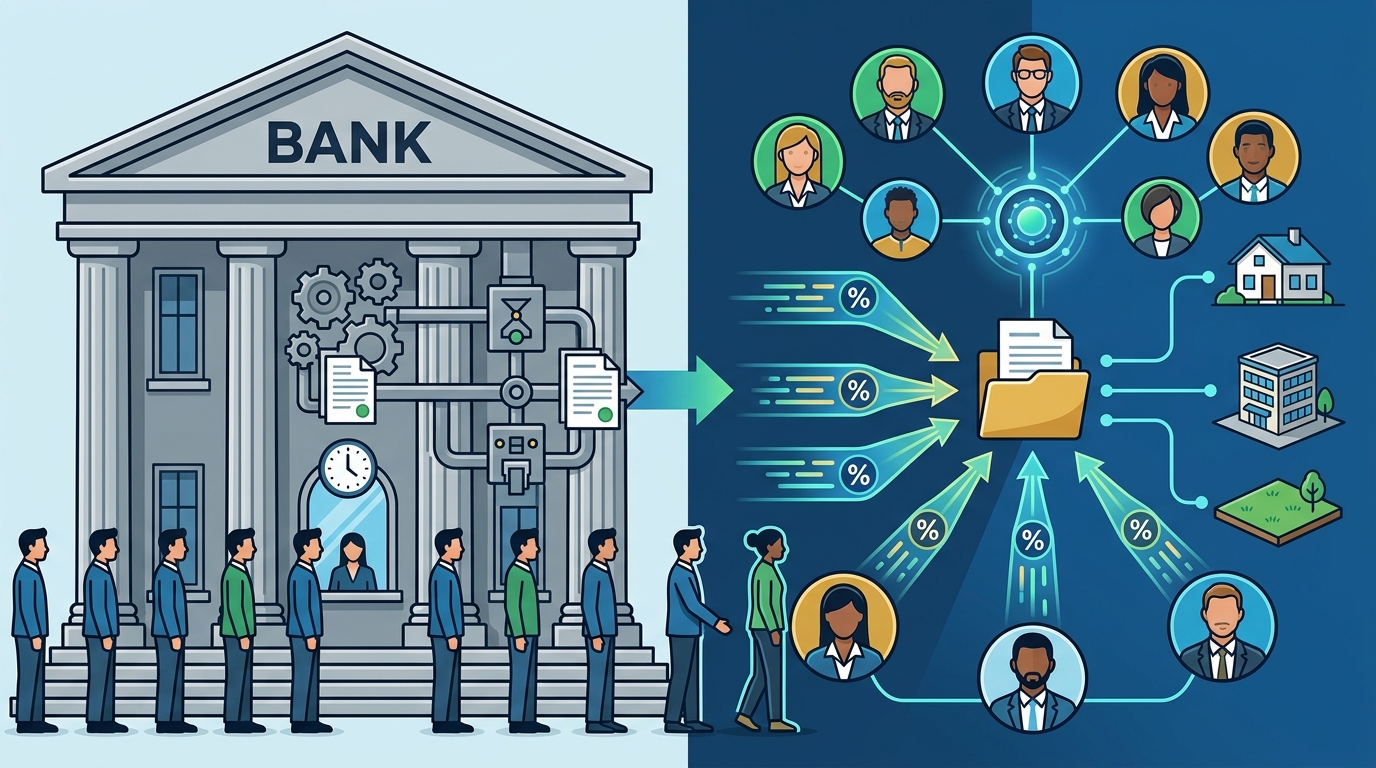
Private lending networks operate as digital marketplaces where multiple private investors and funds compete for a single borrower's deal. Unlike traditional banks that rely on rigid, centralized underwriting algorithms, these networks use asset-based matching to connect borrowers with flexible capital sources. This structure allows for faster funding and more personalized terms, particularly for complex real estate scenarios that standard institutions often reject.
Understanding Private Lending Networks
A private lending network is a digital ecosystem that aggregates capital from individual investors, family offices, and institutional funds to serve borrowers who may not qualify for traditional bank financing. These networks function as intermediaries that streamline the connection between capital providers and property owners. By centralizing the search process, they reduce the time borrowers spend manually contacting individual lenders.
Traditional banks operate on a standardized model where every loan must fit into a pre-defined box. If a borrower's profile deviates from the norm, the application is often denied automatically. In contrast, private networks allow for human discretion and asset-focused evaluation. This means that a borrower with a unique property or a non-standard income stream can still find funding. The network acts as a filter, ensuring that only lenders with matching guidelines see the deal.
Asset-Based Underwriting vs. Credit Scores
The core difference between private and traditional lending lies in the underwriting focus. Traditional lenders prioritize the borrower's credit score, debt-to-income ratio, and verified W-2 income. A hard money loan is a type of loan that is secured by real property, meaning the asset itself is the primary source of repayment. Private lenders look at the Loan-to-Value (LTV) ratio and the property's potential value rather than the borrower's personal financial history.
For example, an investor with a 580 credit score but a property with 40% equity can easily secure funding through a private network. A traditional bank would likely deny this application due to the low credit score. This asset-based approach allows private networks to serve a wider range of borrowers, including those with credit challenges or self-employment income. The implication is that borrowers with strong equity but weak credit profiles have a viable path to financing that was previously inaccessible.
Speed and Flexibility in Deal Structuring
Speed is a critical advantage of private lending networks. Traditional bank underwriting can take 30 to 60 days, involving multiple layers of approval and documentation. Private lenders can often close a deal in 7 to 14 days. This speed is essential for time-sensitive transactions like fix-and-flip projects or distressed property acquisitions. The flexibility extends to the loan terms as well, with private lenders offering shorter durations and higher interest rates in exchange for faster funding.
Consider a real estate investor who needs to close on a property within 10 days to beat out other bidders. A traditional bank cannot accommodate this timeline, but a private network can match the investor with a lender who specializes in rapid closings. This ability to structure loans around the borrower's specific timeline and exit strategy is a hallmark of private lending. It allows investors to act decisively in competitive markets without being held back by institutional bureaucracy.
Closing the Information Gap
For instance, a borrower might receive two quotes that look similar on the surface but have vastly different fee structures. A private network with robust comparison tools can reveal that one loan has hidden origination points or higher prepayment penalties. This transparency empowers borrowers to negotiate better terms and avoid costly mistakes. The implication is that technology is leveling the playing field, giving borrowers the data they need to make informed financial decisions.
Key Takeaways
- Private lending networks connect borrowers with multiple private investors and funds, offering more flexibility than traditional banks.
- Asset-based underwriting focuses on property value and equity rather than credit scores, making financing accessible to a wider range of borrowers.
- Private lenders offer faster closing times, often within 7 to 14 days, which is ideal for time-sensitive real estate deals.
- Technology and AI tools in private networks help close the information gap by providing transparent loan comparisons.
- Borrowers should use comparison tools to evaluate the true cost of capital, including hidden fees and prepayment penalties.
- Private lending is particularly beneficial for complex scenarios, such as fix-and-flip projects or properties with non-standard income streams.
Frequently Asked Questions
What is the main difference between a private lender and a traditional bank?
The main difference is the underwriting focus. Traditional banks prioritize credit scores and income verification, while private lenders focus on the value of the collateral asset and the borrower's exit strategy.
How fast can a private lending network fund a loan?
Private lending networks can often fund a loan within 7 to 14 days, significantly faster than the 30 to 60 days typical of traditional bank underwriting.
Do private lenders care about my credit score?
Private lenders care less about credit scores and more about the Loan-to-Value (LTV) ratio and the property's condition. A lower credit score may not prevent approval if the asset has sufficient equity.
Are private lending networks safe to use?
Reputable private lending networks use data firewalls and identity shields to protect borrower information. They ensure that lenders only see the financial metrics of the deal, not the borrower's personal identity, until a match is made.
What types of properties do private lenders finance?
Private lenders finance a wide range of properties, including residential, commercial, and vacant land. They are particularly known for financing fix-and-flip projects and distressed properties that banks would avoid.
How do I compare offers from a private lending network?
You can use AI-driven comparison tools provided by the network to analyze loan offers side-by-side. These tools standardize the data, allowing you to compare interest rates, fees, and terms accurately.