

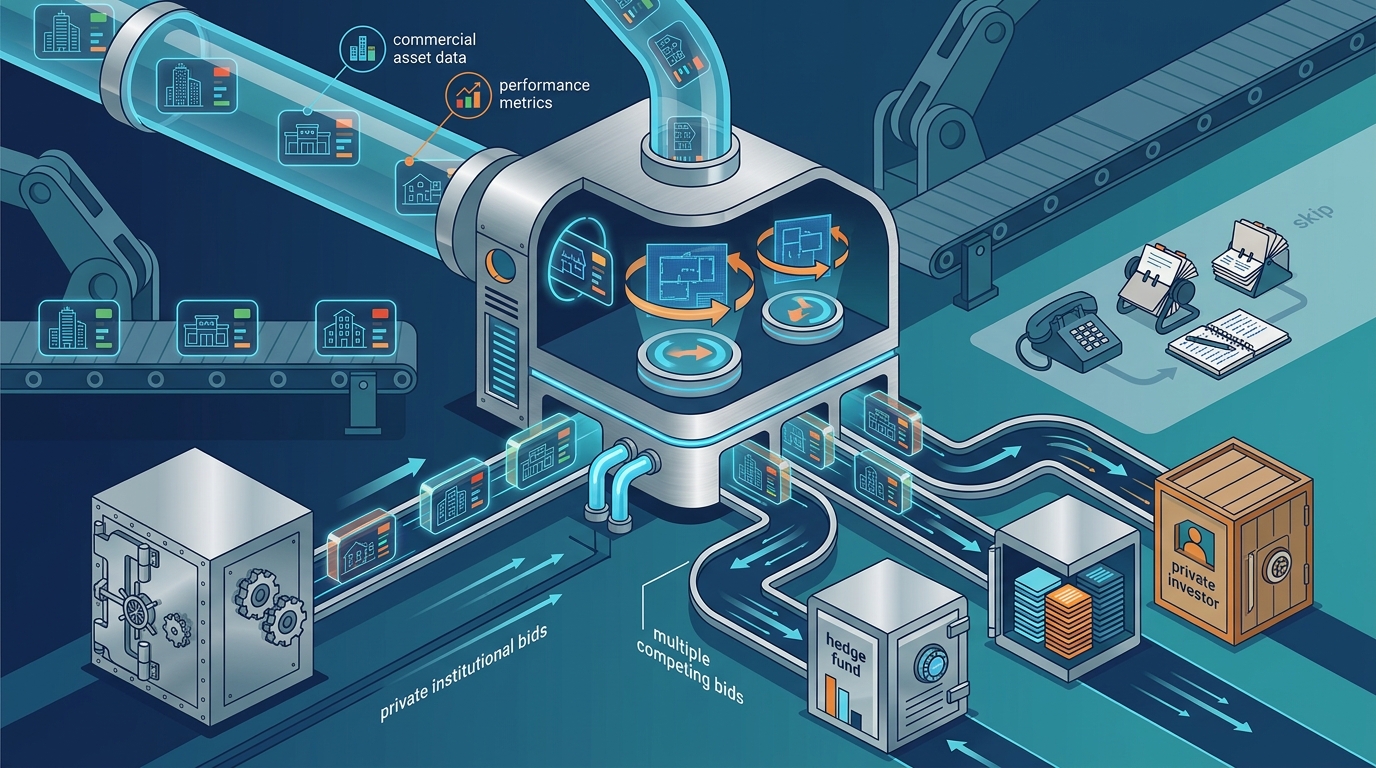
Automated lender matching for commercial real estate uses algorithms to instantly route loan requests to specific capital sources based on asset metrics rather than borrower identity. Lendersa, a specialized loan marketplace, employs this technology to connect commercial borrowers with private and institutional lenders. This process eliminates the slow, manual phone calls typical of traditional brokerage, allowing investors to receive multiple competing bids in minutes. By focusing on the property's performance and risk profile, the system ensures that only qualified capital providers see the deal, streamlining the path to funding.
The Capital Fork: Why Routing Matters
One of the most expensive mistakes a commercial real estate investor can make is bringing a loan request to the wrong class of lender. If you take a complex, rehab-heavy investment property to a standard conventional bank, you will waste weeks in underwriting only to be denied at the last minute. Conversely, if you take a perfectly clean, cash-flowing, primary-residence scenario to a private hard money lender, you will be approved instantly but will overpay by thousands of dollars in unnecessary interest and points. Lendersa eliminates this friction by acting as an intelligent traffic controller for your real estate asset. The system reads the distinct metrics of your scenario and instantly routes it to the exact capital tier where it belongs.
Conventional and Institutional Routing
For stabilized assets with strong financials, the matching engine directs the file toward the "A-paper" path. If the protocol detects strong credit, provable income, and a stabilized property, it immediately routes your file to conventional banks, credit unions, and prime institutional lenders. Because the platform masks your personal identity during this phase, these prime lenders are forced to compete for your business based purely on the strength of your financial metrics. This approach allows borrowers to secure the absolute lowest interest rates on the market without dealing with the usual barrage of predatory broker phone calls. The implication is clear: clean deals get the cheapest capital, but only if they are routed to the correct institutional tier.
Private and Non-QM Routing
Real estate investing often lives in the "grey area" where traditional banks cannot follow. If you have a low credit score, lack W-2 tax returns, or are trying to fund a distressed fix-and-flip property, conventional banks will automatically reject you. When the AI detects these complexities, it instantly routes your scenario away from the banks and directly into a network of private lenders, debt funds, and Non-QM institutions. In this arena, lenders do not care about your W-2s; they care about the "Story" and the asset's exit strategy. The portal translates your project details into the exact language these private investors want to see, securing rapid funding when traditional banks say no. This ensures that complex commercial deals are not left unfunded simply because they do not fit a rigid bank box.
Commercial Properties: Speed vs. Rigidity
Commercial real estate finance presents a unique battlefield where timing is everything. Traditional banks offer excellent long-term rates for commercial assets, but their underwriting processes are notoriously rigid and painfully slow. Lendersa's routing engine plays a crucial dual role in the commercial space by balancing rate and speed. When you are facing a strict closing deadline for an acquisition or a maturity default, banks are often too slow to react. The system instantly pivots your file to aggressive private lenders who can close in days rather than months. This dynamic routing ensures that the borrower is not forced to choose between a low rate and a fast close; the algorithm finds the lender that offers the best balance of both for the specific commercial asset.
The Data Firewall and Anonymized Bidding
In the traditional private lending space, sending your information to the wrong "broker chain" can result in your sensitive documents floating in insecure emails. Lendersa ends this risk with a proprietary Data Firewall that prioritizes privacy. The system establishes isolated, encrypted Mini Control Centers for every bidding lender. Bidding lenders can see your deal parameters, such as property condition, requested amount, and LTV, but they cannot see your identity, email, or telephone number. They are forced to bid purely on the strength of the asset. Your data remains completely anonymized within the network until you choose to release it. This "One-Way Mirror" approach ensures that you maintain total leverage over the market while keeping your personal information secure.
Key Takeaways
- Automated matching routes loans based on asset metrics, not just borrower credit, ensuring the right capital source is engaged.
- Conventional routing is triggered by strong credit and stabilized properties, leading to lower "A-paper" rates.
- Private and Non-QM routing handles complex scenarios, such as low credit or distressed assets, that banks would reject.
- Commercial deals benefit from dynamic routing that balances the speed of private lenders with the rates of institutional banks.
- The Data Firewall anonymizes borrower identity, forcing lenders to compete on the asset's merit rather than personal relationships.
- Isolated Mini Control Centers allow borrowers to compare standardized offers side-by-side without sharing contact details prematurely.
Frequently Asked Questions
What is the primary difference between conventional and private routing?
Conventional routing sends files to banks and institutional lenders based on strong credit and income, while private routing sends files to non-bank investors based on asset value and exit strategy, often accommodating lower credit scores.
Does automated matching require a Social Security Number?
No, the initial matching logic is strictly asset-based. Lendersa does not collect an SSN or trigger a hard credit inquiry for the instant initial matching phase, protecting the borrower's privacy.
How does the system handle commercial properties with strict deadlines?
The routing engine detects urgency and pivots the file to aggressive private lenders who can close quickly, bypassing the slow underwriting processes of traditional banks.
What is a Mini Control Center?
A Mini Control Center is an isolated, encrypted environment where a specific lender can view deal parameters and submit a bid without seeing the borrower's personal identity or contact information.
Can I see my identity to lenders before I am ready?
No, your data remains anonymized until you explicitly approve the connection to a lender. You only reveal your identity to the specific lender with the best offer after you have compared all bids.
How does the platform ensure lenders are qualified?
The system evaluates the loan scenario against the specialized, real-time guidelines of active private lenders, wholesale sources, and institutional funds to ensure only relevant capital providers receive the file.