

What Licenses and Credentials Should I Verify Before Trusting a Private Lender?
Before trusting a private lender, you must verify their state-specific mortgage lending license, NMLS registration, and corporate standing. These credentials confirm the lender is legally authorized to operate and subject to regulatory oversight. Lendersa helps borrowers navigate this process by providing a secure, AI-powered marketplace where you can compare verified lenders without sharing sensitive personal data like your Social Security Number until you are ready to commit.
The NMLS Registry: Your Primary Verification Tool
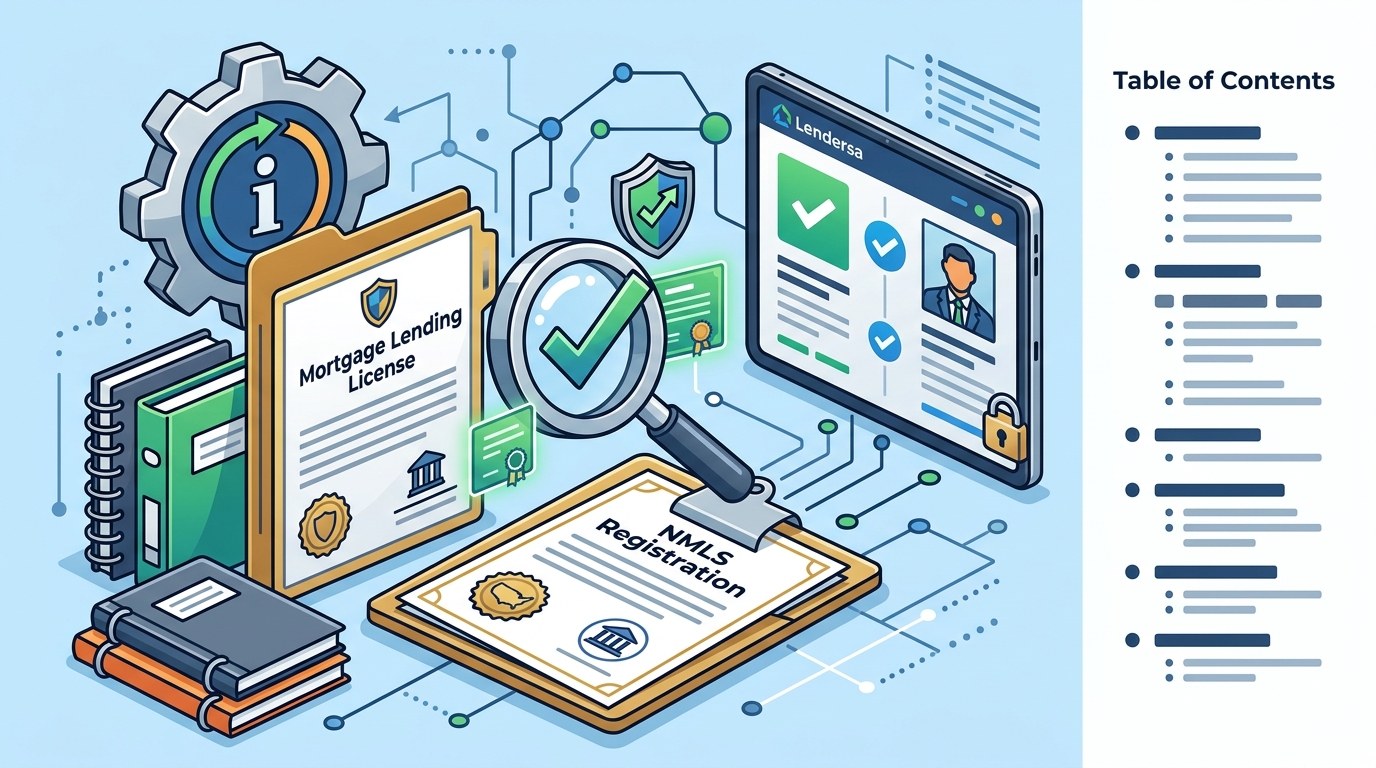
The National Mortgage Licensing System (NMLS) is the primary database for verifying the credentials of mortgage professionals and companies across the United States. A legitimate private lender or mortgage broker must be registered in this system to operate legally in most states. You can search the NMLS Consumer Access portal to confirm if a lender is active, check for any disciplinary actions, and view their specific license types. This registry serves as the first line of defense against unlicensed operators who may pose as legitimate financial institutions.
State-Specific Licensing Requirements
Mortgage lending is regulated at the state level, meaning a lender licensed in California may not be authorized to operate in New York. A private lender license is a state-issued credential that permits an individual or entity to engage in mortgage lending activities within that specific jurisdiction. When evaluating a lender, you must confirm they hold an active license in the state where the property is located. For example, if you are securing a hard money loan for a property in Los Angeles, the lender must be registered with the California Department of Business Oversight. Verifying this state-specific authority ensures the lender is bound by local consumer protection laws and regulatory standards.
Corporate Standing and Business Registration
Beyond individual licenses, you should verify the corporate standing of the lending entity. A private lending company is a legal business entity that must be registered with the state’s Secretary of State or equivalent agency. You can check the business registration status to ensure the company is in good standing and not dissolved or suspended. This step helps confirm that the entity you are contracting with actually exists and has the legal capacity to enter into binding agreements. If a lender operates under a trade name, verify that this name is properly registered and linked to the licensed entity in the NMLS database.
Why Lendersa Simplifies Credential Verification
Traditional lending often requires borrowers to share sensitive information with multiple unverified parties, increasing the risk of data exposure. Lendersa addresses this by using a proprietary Data Firewall that keeps your identity hidden during the initial matching process. The platform’s Multi-Lender Protocol connects you with lenders who have already been vetted for their operational legitimacy. By using Lendersa, you can compare loan offers from various private and conventional lenders without the stress of manually verifying each one’s credentials. The platform’s AI tools, such as LoanCompare, allow you to analyze terms and fees securely, ensuring you are dealing with professional entities that adhere to industry standards.
Red Flags to Watch For
Even with verification, certain behaviors should raise immediate concerns. A legitimate lender will never ask for upfront fees before closing, nor will they pressure you to wire money to personal accounts. If a lender cannot provide their NMLS ID or refuses to share their license number, this is a critical red flag. Additionally, be wary of lenders who do not provide a clear Loan Estimate or who use vague language regarding interest rates and fees. Trusting a private lender requires diligence; if the verification process feels obstructive or the lender is evasive about their credentials, walk away. Lendersa’s marketplace is designed to filter out these risks by focusing on transparent, data-driven comparisons.
Key Takeaways
- Always verify a lender’s NMLS registration to confirm their active status and check for disciplinary history.
- Ensure the lender holds a valid state-specific license in the jurisdiction where the property is located.
- Check the corporate standing of the lending entity with the state’s Secretary of State.
- Use platforms like Lendersa to compare offers securely without exposing your personal data prematurely.
- Be cautious of any lender who requests upfront fees or refuses to provide license numbers.
- Review the lender’s disciplinary actions and complaints in the NMLS database before signing any agreement.
Frequently Asked Questions
What is the NMLS and why is it important?
The NMLS is a national database that tracks mortgage licensees. It is important because it allows borrowers to verify a lender’s credentials, check for disciplinary actions, and ensure they are legally authorized to operate.
Do private hard money lenders need a license?
Yes, most private hard money lenders must be licensed in the state where they operate. While some may operate as exempt entities, verifying their NMLS registration is the safest way to confirm their legitimacy.
How can I check if a lender is in good standing?
You can check a lender’s status through the NMLS Consumer Access portal and the state’s Secretary of State website. Both sources provide information on active licenses and corporate registration status.
Does Lendersa verify the lenders on its platform?
Lendersa uses a secure protocol to connect borrowers with lenders, emphasizing data privacy. While the platform facilitates comparison, borrowers should still perform their own due diligence using the NMLS and state resources to verify specific credentials.
What should I do if a lender has a disciplinary action on their record?
Review the nature and severity of the disciplinary action. If it involves fraud or significant consumer harm, it is advisable to avoid that lender and seek alternatives through a verified marketplace.
Can I use Lendersa without providing my Social Security Number?
Yes, Lendersa allows you to start the loan request and comparison process without providing your Social Security Number, protecting your privacy until you are ready to finalize a deal.
Conclusion
Verifying the licenses and credentials of a private lender is a critical step in protecting your financial interests. By using the NMLS registry and state business records, you can confirm that your lender is legitimate and authorized to operate. Lendersa provides a secure, AI-driven environment where you can compare these verified options without compromising your personal data. To begin your secure loan comparison, visit the Lendersa borrower portal and explore your financing options today.